
A peer learning exchange between the Bank of Tanzania and the Central Bank of the UAE explored how regulators can modernise financial infrastructure while keeping services affordable, safe and responsive to local needs.

Learning from another market
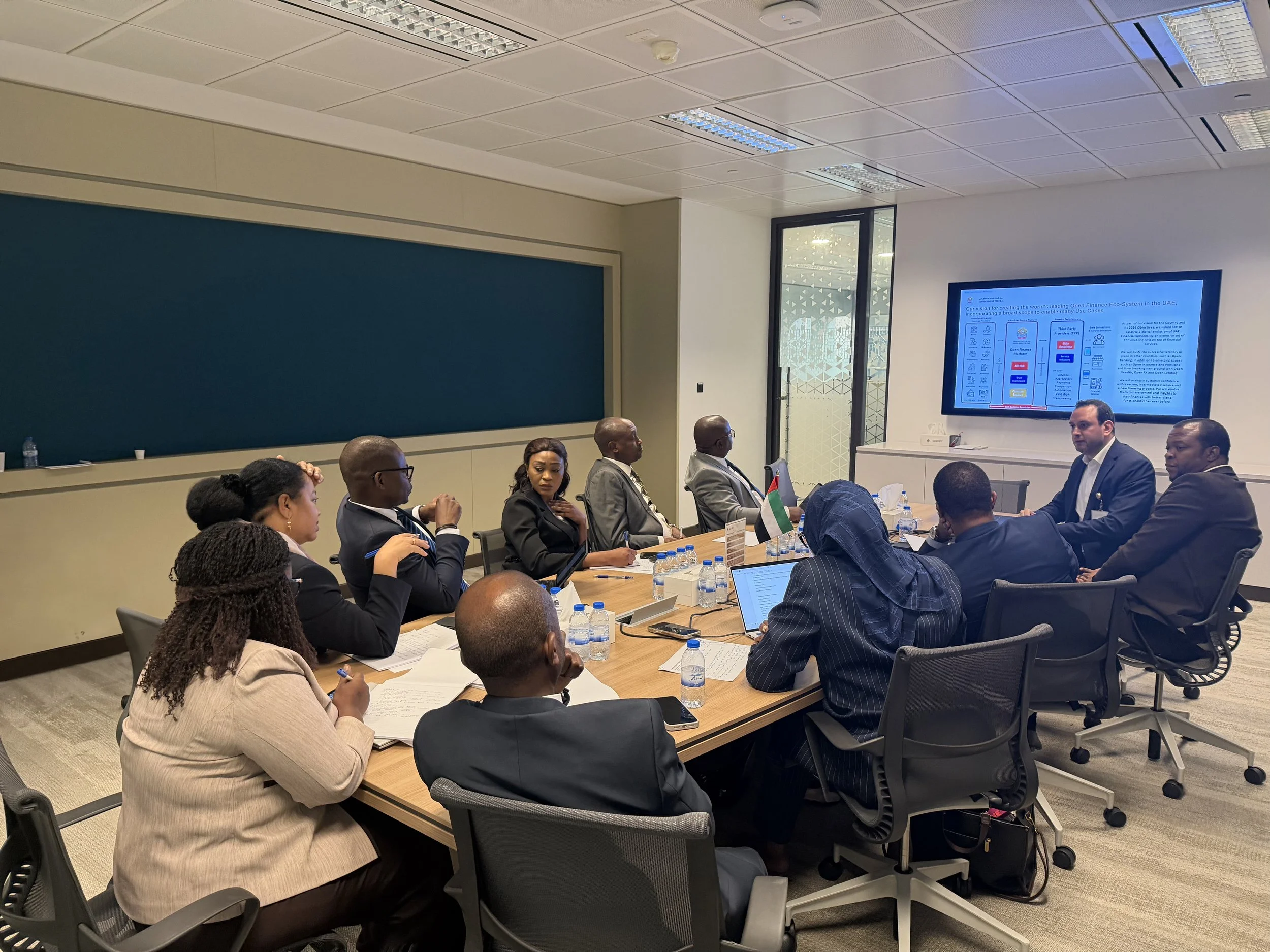
In October 2026, a ten-member delegation from the Bank of Tanzania (BoT) travelled to Abu Dhabi for a week-long peer learning exchange with the Central Bank of the UAE (CBUAE), facilitated by the UNCDF Policy Accelerator. The exchange supported BoT’s ongoing review of its National Payment System (NPS) regulatory framework, alongside its work on open finance and market conduct supervision.
The UAE offers a useful reference point. Under its Financial Infrastructure Transformation (FIT) programme, CBUAE has modernised the country's payment rails, introduced an open finance framework and strengthened consumer protection. The delegation met the teams behind that work, including the Fintech division and regulatory sandbox, the AANI instant payments scheme (comparable to Tanzania's TIPS), Nebras, the entity that operates open finance, as well as the licensing, fraud and AML/CFT, consumer protection and market conduct supervision functions.
Five lessons from the UAE
Start with objectives, not technology. CBUAE's experience shows the value of anchoring a central bank's digital initiatives in a clearly articulated set of objectives from the outset. Governance, incentives, market resistance and customer readiness matter more to success than the technology itself.
Build the foundations first. Open finance cannot work without e-KYC, digital identity and a reliable consent mechanism. Customers must be able to pause or withdraw consent at any time, and data use is tightly limited.
Reach scale early, with hands-on support. Rollout began with the largest banks and insurers, which brought scale quickly. Each institution received dedicated support, from bilateral meetings to weekly clinics.
Make the public option the cheapest one. AANI was designed to be the most affordable way to move money instantly, run on a cost-recovery basis with caps on what institutions can charge.
Supervise by risk, and start small on data. CBUAE's market conduct supervision is risk-based, proportionate and coordinated across departments. Its advice: begin with a small set of well-defined data points and expand over time.

Adapting lessons to Tanzania
Throughout the week, discussions returned to one question: what would a workable version look like in Tanzania? The UAE is a small, highly digital market with near-universal smartphone use, and its choices reflect that. CBUAE itself cautioned against overly prescriptive models, and encouraged regulators to let use cases emerge from the market.
For Tanzania, the relevant factors include smartphone penetration and digital readiness, the balance between banks and mobile money providers, financial literacy, the budget available to build and support new infrastructure, and how any new scheme will sustain itself after launch.
What’s next
UNCDF will continue to work with BoT and CBUAE on targeted follow-up, including virtual sessions on topics that merit deeper discussion, such as tiered licensing for payment service providers. UNCDF is also exploring with BoT how best to support its next steps on the NPS Review and open finance.
The exchange is part of the Policy Accelerator's wider work to connect financial regulators with peers who have faced similar reform challenges, so that lessons travel in both directions and translate into practical policy choices.
Learn more
Explore the UNCDF Policy Accelerator’s work on digital financial services and its approach to policy advice.